





Psychological, Spiritual, and Emotional Wellbeing in Madina
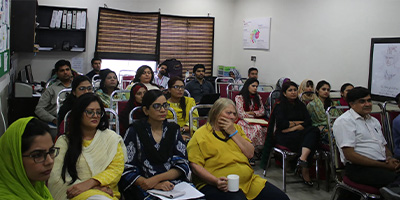
The 13th Global Mental Health (GMH) Training was a meaningful opportunity to engage in important conversations around mental health, including resilience, recovery, and community-based care. While these discussions were valuable, one part of the experience stood out in a very different way—a field visit to Madina.
What made this visit significant was not just its spiritual importance, but how naturally it brought together ideas of mental health, emotional wellbeing, and spirituality. It offered a space where these concepts were not just discussed, but genuinely felt and experienced.
A Natural Shift Within
Many people describe a quiet but noticeable change when they arrive in Madina. It is not something dramatic, but something subtle and steady.
The mind begins to slow down. Thoughts feel less overwhelming. The constant rush of daily life softens, even if just for a while.
People arrive carrying different kinds of burdens—stress, uncertainty, emotional exhaustion. They turn to prayer, often asking for strength or clarity. Yet alongside these prayers, many experience a sense of calm that is difficult to put into words. It feels less like something they have actively sought, and more like something they have been gently given.
A Space That Feels Emotionally Safe
One of the most powerful aspects of Madina is the sense of emotional safety it offers.
The environment allows individuals to pause, reflect, and simply be present. Without the usual pressures of daily life, people find themselves reconnecting with their thoughts and emotions more honestly.
Moments such as Fajr, Tahajjud, or even quiet evenings often become deeply meaningful. It is common to see people in tears, especially in Masjid-e-Nabawi. These tears are not always from sadness—they are often a release. A way of letting go of emotions that may have been held in for a long time.
From a mental health perspective, this kind of environment is deeply supportive. Feeling connected, both spiritually and socially, can ease emotional distress and create a sense of inner stability.
When Learning Becomes Real
During the GMH training, we explored many important ideas around mental health and wellbeing. In Madina, those ideas became real in a very practical way.
Research shows that spirituality can play a positive role in mental health, helping individuals cope better with stress and supporting emotional balance. In Madina, this connection is visible in everyday experiences. Faith provides a sense of purpose, comfort, and direction.
This highlights an important lesson: mental health cannot be separated from a person’s cultural and spiritual context. For many people, faith is not just a belief—it is a key source of strength.
Understanding Strength Differently
Another important reflection from this experience is that struggling emotionally does not mean a person is weak in their faith.
Challenges are a natural part of life. Feeling overwhelmed at times is part of being human.
What Madina offers is not the removal of these challenges, but a different way of facing them—with more calm, patience, and acceptance. It shows that healing does not always come through force; sometimes, it begins with simply allowing yourself to pause and reflect.
Carrying the Experience Forward
Leaving Madina is often emotional. While life returns to its usual routine, something within feels different.
The sense of calm and clarity experienced there does not fully disappear. Instead, it stays with you as a quiet reminder—that peace is possible, that emotional healing can begin, and that connection, whether spiritual or social, matters deeply.
This experience also shapes how individuals relate to others. It encourages greater compassion, humility, and a sense of responsibility. People often return with a stronger intention to contribute positively to their communities.
On a broader level, when such values are shared, they can strengthen communities. A sense of mutual care, understanding, and shared purpose can improve not only individual wellbeing, but collective resilience.
In this way, the impact of Madina goes beyond the individual. It has the potential to influence how people live, interact, and support one another.
Introduction: Why Confidentiality Matters
Confidentiality is not just a professional requirement of mental health care and research, but the basis of trust. Suppose someone involved in a medical trial tells a very personal and personal story about trauma or the client in therapy tells secrets. Secrecy of this information is a legal responsibility as well as an ethical obligation that demonstrates respect, dignity, and compassion. Violation of confidentiality at a mental health research institute can be debilitating: participants may suffer emotionally, researchers may lose credibility, the organization may be undermined, and even terminated in essential studies. Never before has the role of confidentiality in mental health research been more critical than during the age of digital databases, telehealth platforms and instant communication (Peterson, 2020).
The Rising Importance of Confidentiality in Mental Health Research
Most mental health research, in contrast to many workplaces, includes highly sensitive disclosures such as, but not limited to, mental illness history, family conflicts, addictions, or trauma descriptions. When they disclose such information, extraordinary trust is placed on researchers and clinicians by the participants and patients. In this respect, confidentiality surpasses privacy, it has a direct impact on the well-being of an individual. Depression disclosure by a patient should not be stigmatized. The participants of the research should be aware that their information will not be abused and that it will not be associated with their name. To provide scientific integrity and to protect the safety of the participants, the records of the clinical trials should be safeguarded. Through the preservation of confidentiality, research organizations also provide a powerful message; We have a high regard for your dignity, and we are determined to protect your trust (Beauchamp & Childress, 2019).
Policies, Procedures, and the Ethical Backbone
In a mental health facility, the principle of confidentiality is based upon several levels of accountability. Article 14 of the Constitution of Pakistan supports privacy and dignity as basic rights by law. The principle of Respect of Persons provided by Belmont Report and the APA Ethics Code, as well as ethics in research, demand that the psychologist and researcher maintain confidentiality (American Psychological Association, 2017). How data are to be collected, stored, accessed, and anonymized is then specified in institutional protocols. These are guided by the ethical standards of informed consent, respect of dignity and accountability. The participants should know what will be done with their information and its location. Confidentiality is a respect in which a person acknowledges the value of the individual. Lastly, accountability is the assurance that all staff members, including researchers, administrative personnel, among others, are held responsible in maintaining confidentiality of information (Fisher and Anushko, 2008).
Everyday Practices That Safeguard Confidentiality
Confidentiality has to be part and parcel of practice, not policy, in research organizations. This includes anonymization of identities (rather than using names) in datasets, limited access to unprocessed transcripts or therapy notes, the encryption of electronic materials, and physical document security. It is also associated with stories of case discussion in supervision (without disclosure of the recognizable information), consent form clarification of the retention period, periodic training about how to handle information with sensitivity. Such everyday activities not only help to minimize risks, but they strengthen an organizational culture based on trust and reverence (Martin and Parmar, 2019).
The Organizational Payoff: Why Confidentiality Builds Trust
In a mental health research institute, or rather in any research related to mental health, the cost of disclosing information is heavy. Confidentiality can enhance data quality in that, when it is given priority, participants will be more willing to participate to the fullest extent in a study and will volunteer to divulge information, thus improving data quality. Confidentiality enhances the therapeutic alliance that is fundamental to successful treatment when there is a therapeutic relationship in therapy. To researchers, data security guarantees the veracity and validity of their research. In the case of institutions, credibility of protecting dignity and privacy creates better relationships with funders, partners, and society. By so doing, secrecy not only leads to individual interests but also benefits the research business in totality.
Final Reflection
Originally, the concept of confidentiality in mental health research relates to respect, dignity, and protection rather than secrecy. Within safe participants, they get to interact in a freer manner, they are capable of giving deeper information and they will also make significant contributions towards the development of knowledge. Attainment of knowledge is not selective; it is the moral lynchpin of scientific integrity and human welfare of a mental health organization. Privacy protection, in the end, involves the protection of people, and when people feel respected, respect is the basis of care as well as often of the study. Confidentiality here is not only good ethics, it is basic to healing and discovery.
References
American Psychological Association. (2017). Ethical principles of psychologists and code of conduct (2002, amended effective June 1, 2010, and January 1, 2017).
Beauchamp, T., & Childress, J. (2019). Principles of biomedical ethics: marking its fortieth anniversary. The American journal of bioethics, 19(11), 9-12.
Fisher, C. B., & Anushko, A. E. (2008). Research ethics in social science. The SAGE handbook of social research methods, 95-109.
Peterson, P., Morrison, B., Laurie, R., Bolaños Gramajo, V. Y., & Morrison, J. B. (2020). Assessing the factorial structure and internal consistency of the mental fitness and resiliency inventory (MFRI). International Journal of Workplace Health Management, 13(2), 153-171.
Pirson, M., Martin, K., & Parmar, B. (2019). Public trust in business and its determinants. Business & Society, 58(1), 132-166.