


The Only Park Left: Why the Phone is the New Food Court
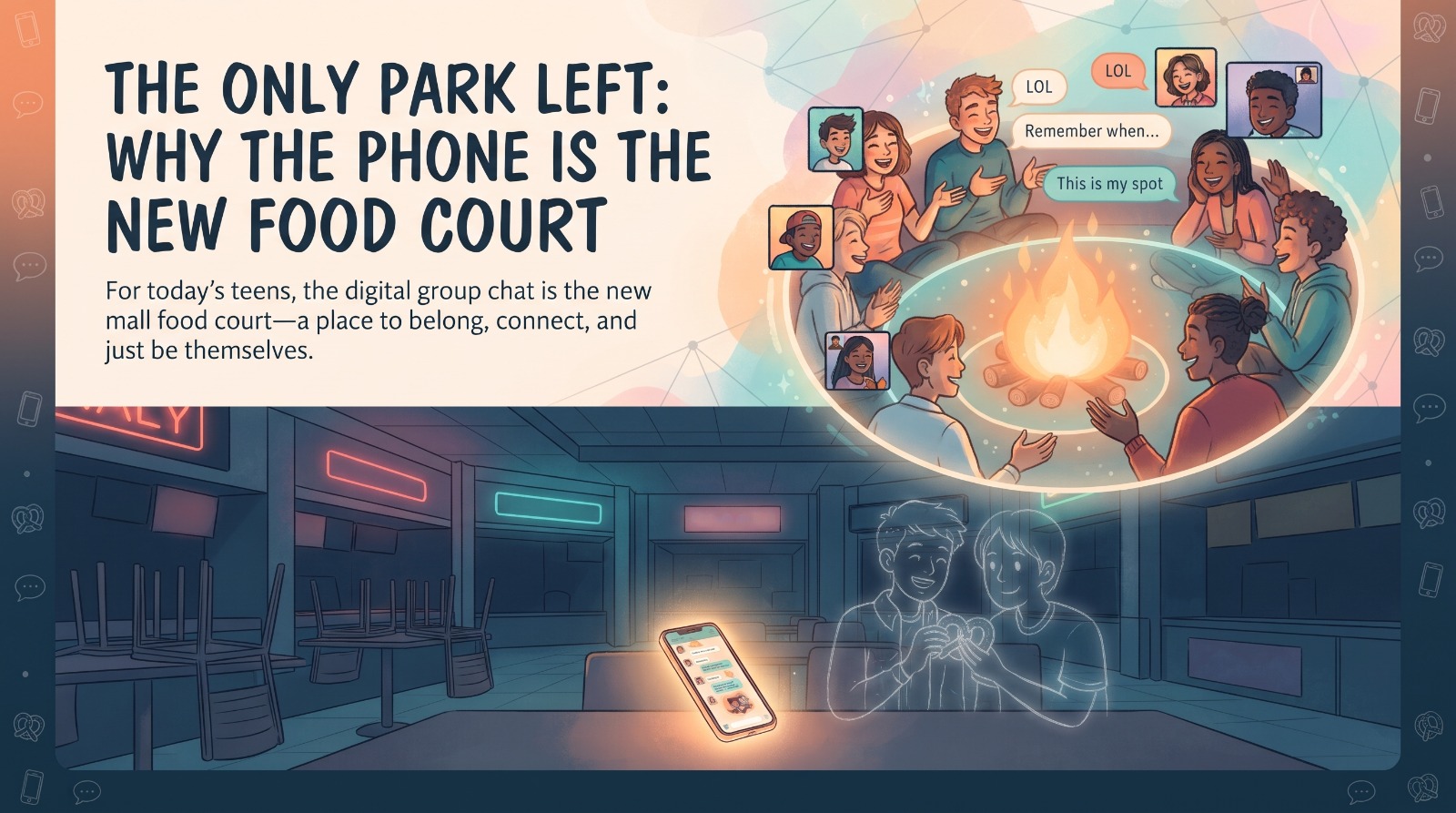
I still remember sitting at the mall food court for hours with friends, sharing one snack between us. We weren’t there to shop. We were there to talk, laugh, and just exist somewhere that wasn’t home or school. It was our own little world.
That world doesn’t really exist anymore for kids today. Malls are shutting down. Parks have rules against hanging around. Kids are stuck indoors, and while that might feel safer, it’s also a lot lonelier.
So when we see a teenager attached to their phone in a dark room, we call it an addiction. We blame the screen, the apps, the algorithm. But look a little closer. They’re not just scrolling through nothing. They’re looking for the same thing we had a place to belong.
A group chat is their food court. It’s free, it’s always open, and no one tells them to leave. For many kids, the phone is the only social space they’ve got.
But there’s a big difference between then and now. When we said something embarrassing, it disappeared into the air. Today, everything gets screenshotted. Every silly joke, every bad day, every argument, it sticks around forever. Kids aren’t just hanging out anymore. They’re always on display, with no way to step off the stage.
The instinct many parents have is to just take the phone away. But think about how it would’ve felt if someone had locked us out of the mall and sent us to our rooms. It wouldn’t have fixed anything. It just would’ve made us miserable and more alone.
This isn’t a fight we win by cutting off technology. Our kids want the same things we wanted friends, connection, a place to figure out who they are. The landscape just changed. So instead of obsessing over how many hours they spend online, we should ask better questions. Is the space they’re in kind or cruel? Do they feel free to be themselves, or do they feel pressured to look perfect all the time?
The phone isn’t the real problem. It’s a sign that we haven’t given kids enough room real or digital, to just be kids. The answer isn’t fewer screens. It’s more safe spaces, online and off, where they don’t have to perform for anyone.
And sometimes, the best thing we can do is join them in that world not to lecture or monitor, but simply to understand. Because we haven’t forgotten what it felt like to need a place of our own.